What Is ADAS? A Guide for Santa Rosa Drivers
What Is ADAS (Advanced Driver Assistance Systems)?
ADAS stands for Advanced Driver Assistance Systems. It is the collective name for the suite of electronic safety and convenience technologies built into modern vehicles that help drivers avoid collisions, stay aware of their surroundings, and respond to hazards faster than reaction time alone allows.
The technology did not appear all at once. Early versions of driver assistance technology began appearing in the 1990s with anti-lock braking and electronic stability control. Forward-facing cameras capable of reading lane markings and detecting vehicles became commercially available in the early 2010s, initially as premium options on luxury vehicles. By 2016, a coalition of major automakers committed to making automatic emergency braking standard on most new vehicle lines by 2022. Today, the majority of new vehicles sold in the United States come equipped with at least one ADAS feature, and many are equipped with several working together as an integrated system.
For Santa Rosa and Sonoma County drivers, that shift means the vehicles on the road around them, and very likely the vehicles they drive themselves, are operating with technology that was considered advanced just a decade ago and is now standard equipment.
Why ADAS Matters More Than Most Drivers Realize
Most drivers interact with their ADAS features every day without thinking about them. The gentle alert when a car drifts toward the shoulder. The brakes that engage a half-second faster than the driver's foot would have. The warning that fires when a car appears in the blind spot during a lane change. These moments are so routine they barely register.
Rear-end collisions, lane departure crashes, and blind spot accidents are among the most common and preventable serious crashes on California roads. ADAS systems exist specifically to address the gap between human reaction time and the speed at which dangerous situations develop.
For Sonoma County drivers navigating Highway 101 through Santa Rosa, the winding two-lane routes through the wine country hills, and the mix of commuter and tourist traffic throughout the region, these systems are doing real work every drive. A vehicle with functioning, properly calibrated ADAS is a meaningfully safer vehicle than one without it or one with systems running on incorrect data. That distinction matters every time the car leaves the driveway.
How ADAS Works: The Technology Behind the Features
ADAS systems gather information about the vehicle's environment using a combination of sensors. Most vehicles use several of these simultaneously, with data from different sources cross-referenced to give the system a more complete and accurate picture of what is happening around the car.
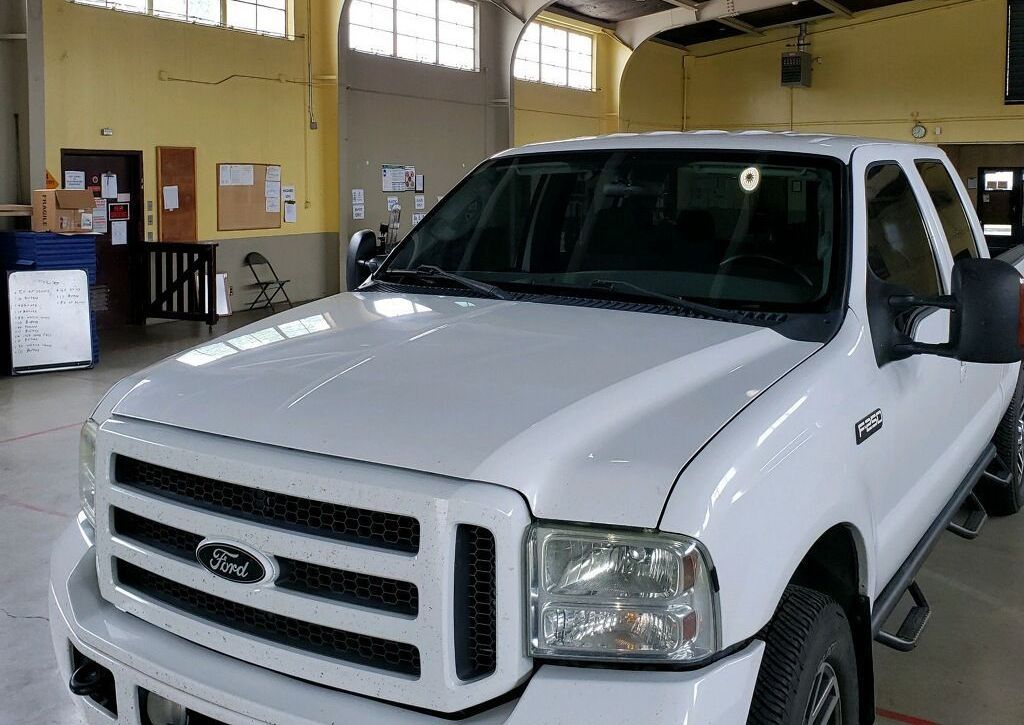
Forward-facing cameras are mounted behind the rearview mirror and look through the windshield. They are the central sensors for most lane-based and collision-detection features. The camera reads lane markings, detects vehicles and pedestrians ahead, identifies road signs, and tracks the following distance to the vehicle in front. Because this camera looks through the windshield, the condition and calibration of the glass directly affect how accurately it reads.
Radar sensors are mounted at the front and rear of the vehicle and use radio waves to detect the distance and speed of objects around the car. Radar performs reliably in poor weather conditions, including rain, fog, and darkness, where camera systems have limitations. Radar is the primary sensor for adaptive cruise control and automatic emergency braking at higher speeds.
Ultrasonic sensors are short-range sensors embedded in bumpers that detect nearby objects during low-speed maneuvers. Parking assist, rear cross-traffic alerts, and proximity warnings at low speeds all rely on ultrasonic sensing.
Lidar uses laser pulses to create a detailed three-dimensional map of the surrounding environment. It is less common in standard production vehicles than the other sensor types but is increasingly appearing in vehicles with higher-level semi-autonomous capabilities.
Most ADAS systems combine data from multiple sensor types simultaneously, using the camera to identify what an object is, radar to track its speed and distance, and the combination to make decisions about when and how to alert the driver or intervene.
The Full Range of ADAS Safety Features
Understanding the specific features that run through ADAS technology helps drivers know what they are relying on every time they get behind the wheel.
- Lane Departure Warning monitors the vehicle's position relative to lane markings. When the vehicle drifts toward a lane line without a turn signal, the system alerts the driver with an audible tone, visual indicator, or steering wheel vibration.
- Lane Keeping Assist goes a step further than a warning. When the system detects a drift, it applies a gentle steering correction to guide the vehicle back into the lane without requiring driver input.
- Automatic Emergency Braking detects an imminent collision ahead and applies the brakes without driver input when the driver has not responded in time to avoid impact. It can significantly reduce collision severity even when it cannot prevent the impact entirely.
- Forward Collision Warning monitors the closing speed between the vehicle and whatever is ahead. When the gap closes faster than the system considers safe, it alerts the driver before the situation becomes critical, giving the driver time to brake before automatic systems engage.
- Adaptive Cruise Control maintains a set speed like traditional cruise control but also monitors the vehicle ahead and automatically adjusts speed to maintain a set following distance. When traffic slows, the vehicle slows. When the lane ahead clears, the vehicle returns to the set speed.
- Blind Spot Detection monitors the areas alongside and slightly behind the vehicle that are outside the driver's direct sightline. When a vehicle enters the blind zone, a warning light in the mirror or on the A-pillar alerts the driver.
- Rear Cross Traffic Alert warns the driver when a vehicle is approaching from either side while the car is in reverse. It is particularly useful in parking lots and driveways where the rear of the vehicle is exposed to cross-traffic that is not visible in the rearview mirror.
- Pedestrian & Cyclist Detection extends the automatic emergency braking system's ability to identify not just vehicles but pedestrians and cyclists in or near the vehicle's path. It applies the brakes when a collision with a person is detected as imminent.
- Traffic Sign Recognition reads posted speed limit signs, stop signs, and other road signage through the windshield camera and displays the information on the instrument cluster or heads-up display, keeping the driver informed without requiring them to look away from the road.
- Automatic High Beam Control switches between high and low beams automatically based on the presence of oncoming vehicles or vehicles ahead, maximizing visibility at night without requiring manual switching or blinding other drivers.
- Driver Drowsiness Detection monitors steering patterns, lane position, and, in some vehicles, the driver's eye movements to detect signs of fatigue. When indicators of drowsiness are detected, the system alerts the driver to take a break.
- Parking Assist uses cameras and sensors to guide or, in some vehicles, automatically steer the vehicle into a parallel or perpendicular parking space. It removes one of the most difficult low-speed maneuvers from the driver's responsibility.
Why ADAS Makes a Real Difference in Road Safety
The case for ADAS technology is not theoretical. Automatic emergency braking has been shown in multiple studies to meaningfully reduce the frequency and severity of rear-end collisions. Lane departure systems address one of the most common causes of fatal crashes on rural and highway roads. Blind spot detection reduces lane-change collisions. Collectively, these systems address the categories of driver error that account for the largest share of serious crashes on California roads and across the country.
For Sonoma County drivers navigating Highway 101 through Santa Rosa, the winding two-lane routes through the wine country hills, and the mix of commuter and tourist traffic throughout the region, these systems work constantly in the background to close the gap between human reaction time and the speed at which dangerous situations develop.
Static vs. Dynamic Calibration: What the Difference Means
When a windshield is replaced, the ADAS camera that looks through it must be recalibrated before the systems relying on it can function accurately again. That calibration falls into two categories.
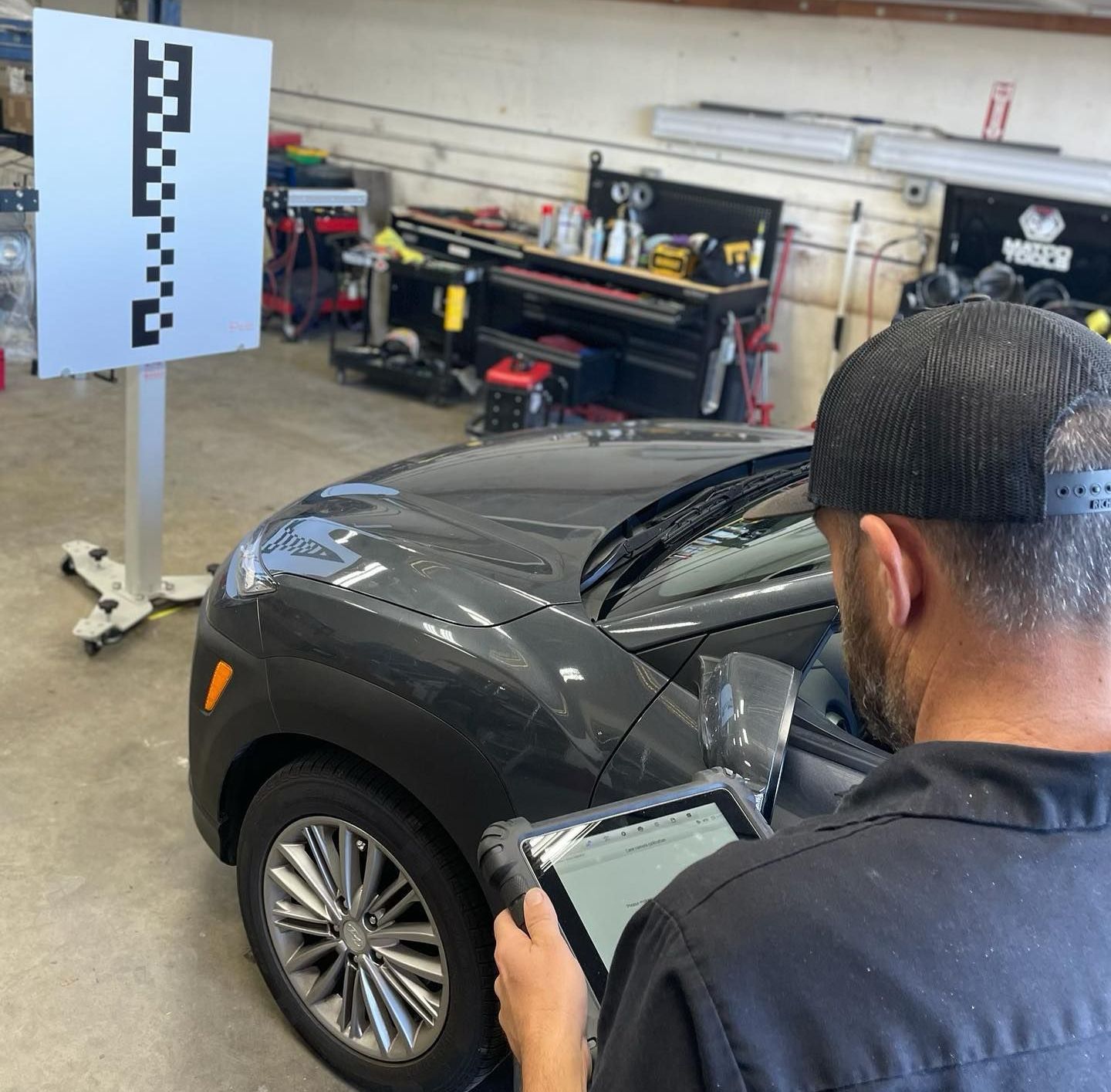
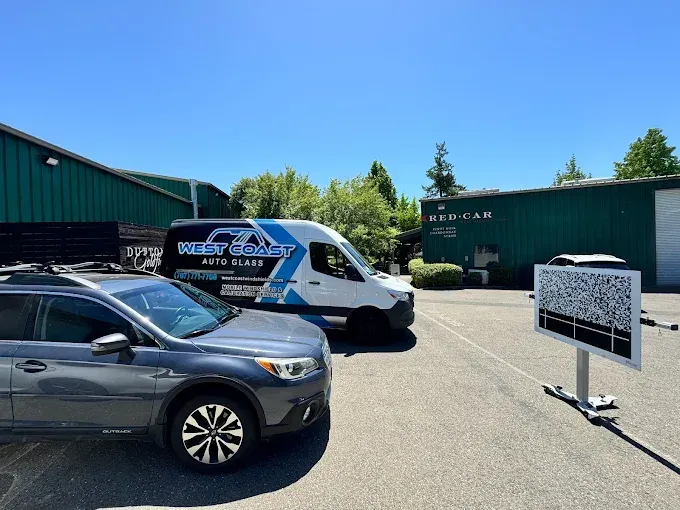
Static calibration is performed with the vehicle stationary. The technician positions specialized calibration targets at precise distances and angles in front of the vehicle, then uses diagnostic equipment to realign the camera to those targets in a controlled environment. The process requires a level surface, adequate space, and the correct target specifications for the specific vehicle.
Dynamic calibration is performed while the vehicle is driven. The system gathers data from real-world road conditions, lane markings, and the surrounding environment as the vehicle moves, and the technician uses diagnostic tools to confirm that all systems are reading the road accurately during operation.
Some vehicles require only static calibration. Others require only dynamic calibration. Many require both, performed in sequence. The specific requirement depends on the vehicle manufacturer, the model year, and the technology package installed. West Coast Auto Glass determines which calibration type applies before the appointment begins so the full scope of work is completed correctly in a single visit.
Why Windshield Replacement Disrupts ADAS Calibration
The forward-facing ADAS camera uses the windshield as part of its reference system. The optical properties of the glass, its thickness, clarity, and angle, are factored into how the camera interprets what it sees. When the original windshield is replaced, even with glass that matches the original specification precisely, those variables shift. The camera is now looking at the road through a lens that does not match its calibration baseline.
The margin for error is extremely small. A shift too minor to see with the naked eye is large enough to affect how accurately the system detects lane lines, measures following distance, or tracks the speed of a vehicle ahead. Driving without recalibrating after a replacement means operating safety systems that are working from incorrect data, producing results that may look normal but are not accurate.
This is also why the quality of the replacement glass matters. Glass that does not meet OEM optical specifications complicates calibration and can create ongoing sensor errors even after a calibration attempt. West Coast Auto Glass uses OEM or better-quality glass on every replacement, which supports accurate calibration and ensures the systems perform to factory specifications after the job is complete.
Does California Insurance Cover ADAS Calibration?
California drivers with comprehensive auto insurance typically have coverage for windshield replacement, with the standard comprehensive deductible applying. California is not a zero-deductible state for windshield replacement, so the deductible amount on the policy determines the out-of-pocket cost.
For ADAS calibration, most major insurance providers cover it as part of the windshield replacement claim when the vehicle requires it. Because calibration is a required step in completing a safe replacement on equipped vehicles, the majority of insurers treat it as covered work within the same claim rather than a separate billable service.
West Coast Auto Glass is in-network with all major insurance carriers and handles the claims process directly for Santa Rosa and Sonoma County drivers. The team verifies coverage before the appointment is scheduled and manages all paperwork and communication with the insurer so drivers are not left navigating it on their own.
ADAS Calibration & Windshield Service in Santa Rosa from West Coast Auto Glass
West Coast Auto Glass has served Santa Rosa and Sonoma County for over 20 years with certified windshield replacement, repair, and ADAS calibration. Our team operates primarily through mobile service, coming to homes, workplaces, and any other accessible location throughout the region. Every replacement is backed by a lifetime warranty, and all services are covered by insurance claims assistance for policyholders using comprehensive coverage.
Contact
West Coast Auto Glass today for a free quote on your
windshield replacement or
ADAS calibration in
Santa Rosa,
Fulton,
Healdsburg, and
Rohnert Park.